
Ledderhose Disease: Physiotherapy and Treatment for Foot Health
Ledderhose disease (plantar fibromatosis) forms lumps in the arch of the foot that can make walking painful. The role of physiotherapy and other treatments.
By Dr. Luigi ManziUpdated on
Ledderhose disease. A name you may not be familiar with, but if you've made it this far, you've probably heard of those annoying lumps that form under the soles of your feet. Or maybe you have them yourself, and you're trying to figure out what to do.
I'll tell you something right away: you're not alone. In my office, I often see patients who come in worried, with that feeling of "having something under their foot" that initially feels like a pebble in their shoe, but then doesn't go away. Never. In fact, sometimes it gets worse.
Today we're talking about what can be done with physiotherapy and conservative treatments. Because yes, in most cases, significant improvements can be made without resorting to surgery.
What exactly is this Ledderhose disease?

So, let's start with the basics. Ledderhose disease—also called plantar fibromatosis—is a condition in which fibrous nodules form in the plantar fascia.
Think of the plantar fascia as a kind of taut "rope" that runs under the foot, from the heel to the toes. In Ledderhose disease, parts of this structure thicken and become hard, forming actual nodules. It's not like plantar fasciitis, where we mainly have inflammation—in this case, the tissue transforms and becomes fibrous.
It's a benign condition, and this should be stated right away to reassure everyone. There's nothing serious or dangerous about it. But it can be truly annoying to live with on a daily basis.
The other day a patient came to me and said, "Doctor, it's like always walking on a stone, but the stone is inside my foot." Well, that describes it well.
Why does it happen? The causes of Ledderhose disease
Good question, and I have to be honest: we don't know for sure. Medicine still has mysteries, and this is one of them.
What we do know is that there's often a genetic component. If someone in the family has had similar problems, or perhaps Dupuytren's disease of the hands (which is a relative of Ledderhose), the risk increases.
Then there are other factors that seem to play a role. Intense physical activity, especially that which puts a lot of stress on the feet. Certain medications. Diabetes can predispose. Age—it's more common after 40-50.
But be careful: having these risk factors doesn't mean you'll necessarily get it. And not having them doesn't protect you completely. The human body is complex, and sometimes things happen for no apparent reason.
Symptoms: What You Should Know
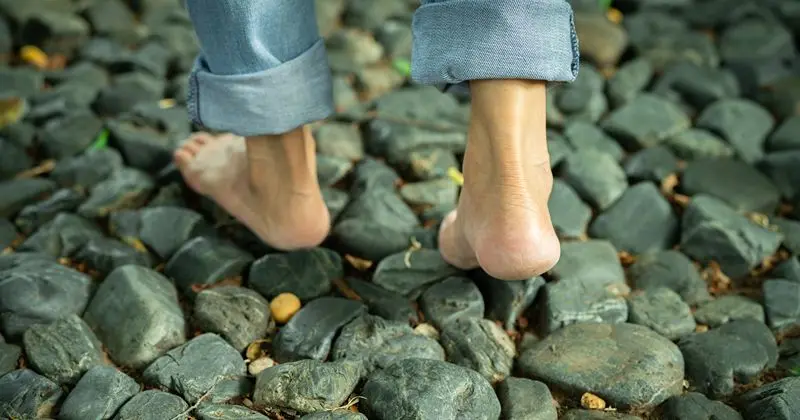
The first symptom is almost always the same: you feel something under your foot. A swelling, a hardened area. At first, it might not even hurt.
Then, over time, it can start to bother you. Pain when walking, especially barefoot. That "foreign body" sensation that accompanies every step. Some patients tell me it's worse in the morning, when the tissues are stiffer.
The interesting thing is that the pain isn't always proportional to the size of the nodule. I've seen small nodules that were very bothersome, and larger nodules that were practically asymptomatic. The body is strange that way.
In more advanced cases, if the lump grows significantly, it can even limit the movement of the toes. Fortunately, it rarely gets to this point.
How do I make the diagnosis in the office?
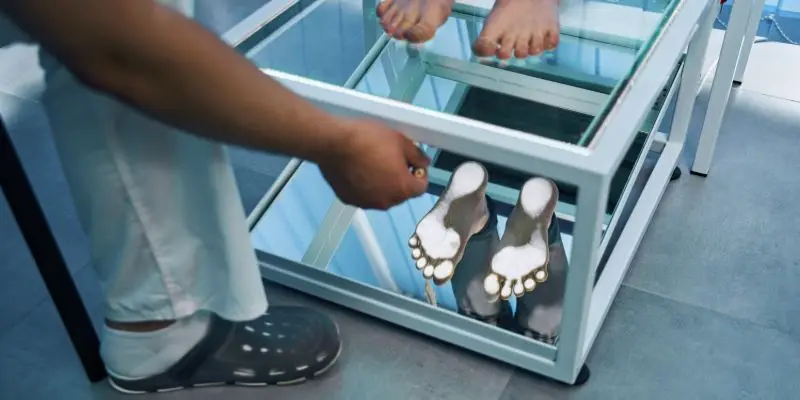
When a patient comes to me with these symptoms, the first thing I do is… touch. Palpate the foot. I immediately feel if there's a lump, how big it is, how hard it is.
Then I look at how the patient walks. Ledderhose disease can alter the way the foot strikes, and this sometimes creates a cascade of problems—in the knee, hip, even the back.
I also usually do an ultrasound. It's quick, painless, and allows me to see exactly what's happening in the tissues. How big the lump is, and whether there are other small ones that can't be felt yet.
I reserve MRI for the most complex cases, when I need to plan a surgery or when I have doubts about the diagnosis.
Physiotherapy for Ledderhose disease: the first approach
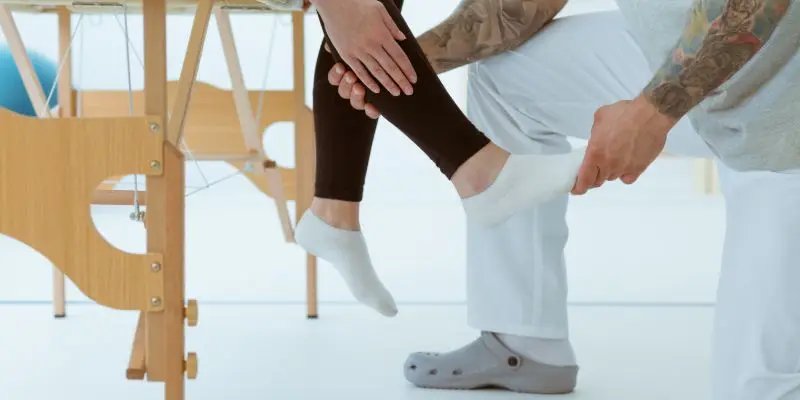
Here we come to the heart of the matter. Physiotherapy is often the first thing I try, and I must say that in many cases the results are good.
The goal isn't to make the lump disappear—once it forms, it rarely goes away on its own. The goal is to reduce pain and improve foot function.
Stretching exercises are essential. Stretch the plantar fascia, the calf muscles, and anything that can cause tension in the foot. It's patient, consistent work. Don't expect miracles in a week, but after a month of regular exercise, you often start to feel the difference.
Then there are strengthening exercises. Stronger foot muscles mean better load distribution and less stress on critical points. It seems trivial, but it works.
Passive mobilization can be very helpful. An experienced physical therapist knows how to move the foot to maintain flexibility and reduce adhesions.
Other treatments that may help
Physiotherapy alone isn't always enough. Luckily, we have other options.
Shockwaves, for example. These are high-energy acoustic pulses that can help "soften" fibrous tissue. They aren't painful, although some people may experience some discomfort during the treatment.
Tecar therapy can be helpful in reducing inflammation and improving local circulation. And then there are customized insoles—a good insole can redistribute the load and take pressure off the nodule.
I also sometimes use corticosteroid injections, but with great caution. They may provide temporary relief, but they don't address the underlying problem.
When surgery becomes necessary
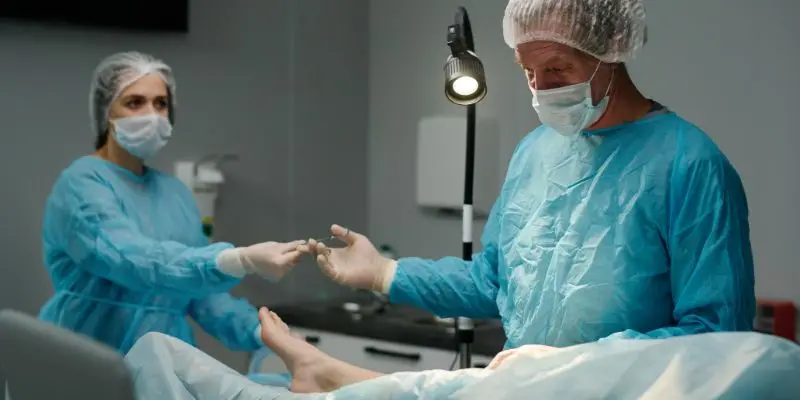
The truth is that most patients with Ledderhose disease don't require surgery. But there are cases where surgery becomes the only sensible solution.
If the pain is disabling despite all conservative treatments. If the lump is so large that it seriously limits foot movement. If the quality of life is compromised.
The surgery involves removing the diseased fibrous tissue. It's no walk in the park, and post-operative rehabilitation is important. But when indicated, it can truly change your life.
How to prevent Ledderhose disease

Preventing it completely is difficult, as there's often a genetic predisposition. But something can be done.
Keep your feet in good shape with regular exercise. Choose appropriate shoes—neither too tight nor too loose, with good arch support. Avoid repetitive foot trauma.
If you exercise, do so gradually. A sudden increase in physical activity can trigger problems. And if you experience the first symptoms, don't wait for them to worsen. The sooner you intervene, the better.
SmartHallux: Where we can help you

Here at SmartHallux, we specialize in foot and ankle surgery. Dr. Luigi Manzi, who has extensive experience in this field, provides each patient with a personalized treatment plan using the most modern techniques.
The SmartHallux team treats conditions such as hallux valgus , Morton's neuroma , and other deformities that cause foot pain. Providing comprehensive support throughout the treatment process, SmartHallux can be a winning choice for effective treatment tailored to your needs. Book your specialist consultation with the SmartHallux team now (opens in a new tab).
Questions you often ask me
How is Ledderhose disease treated with physiotherapy?
Physiotherapy focuses on three main aspects: stretching to increase flexibility, muscle strengthening to stabilize the foot, and mobilization to keep the joints loose. It's not a miracle cure, but it often brings significant benefits.
What are the most worrying symptoms?
Hard lumps under the sole of the foot, pain that worsens when walking, and stiffness, especially in the morning. If these symptoms persist for weeks, it's best to get checked out.
Will he ever go back to completely normal?
It depends. In mild cases, with the right treatment, you can return to a completely normal life. In more severe cases, the goal is to control symptoms and maintain good function.