
Traditional Bunion Surgery: What You Need to Know
Traditional bunion surgery is still one of the most popular options today. But what does it really mean? Let's take a look.
By Dr. Luigi ManziUpdated on
Have you noticed that your big toe is "running away" toward your other toes? Maybe you've started experiencing pain when walking, or you're struggling to find shoes that don't bother you. Well, you're probably living with a bunion.
It's a deformity I see very often in my office. More common in women, but it affects men as well. And when the pain becomes significant, when walking becomes a daily problem, then it's time to seriously discuss surgery.
Traditional bunion surgery is still one of the most popular options today. But what does it really mean? Let's take a look.
What Happens When Your Big Toe Goes Crazy?
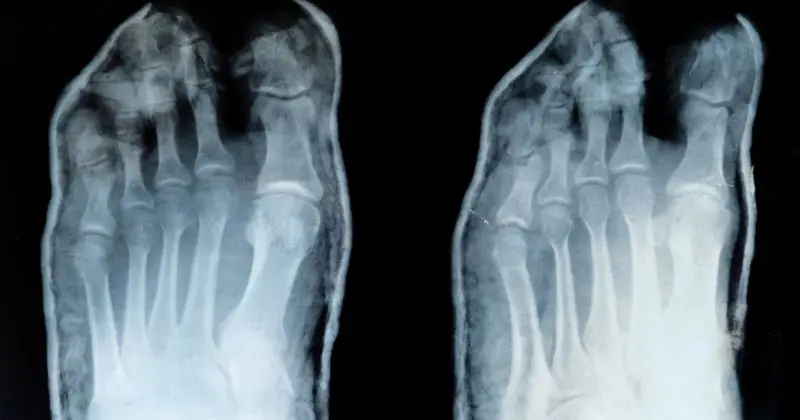
Think of your big toe as a toe that's decided to "rebel." Instead of staying straight, it starts to bend toward the second toe, creating that famous "bun" that is the head of the first metatarsal protruding. It's not just an aesthetic problem, believe me.
The pain can be truly limiting. My patients often describe it to me as "a stone in their shoe that never goes away." Walking becomes difficult. Finding comfortable shoes? Mission impossible. And then there's the inflammation, the redness, and sometimes even small ulcers if the deformity is significant.
Why Does It Happen? It's Not Just the Heels' Fault

Many people think it's all down to wearing the wrong shoes. True, but only partly. Genetics play a key role—if your mother or grandmother had bunions, the chances are significantly higher.
On the other hand, there are also factors such as foot type (the "Egyptian" type, with its longer big toe, is more at risk), pronation problems, and yes, even shoes that are too tight or high heels worn for years can contribute. Rheumatoid arthritis is another factor to consider.
Truth be told, it's often a combination of several factors. There's rarely a single cause.
Symptoms: When Your Big Toe Cries Out for Help

Pain is the main symptom. But it doesn't always appear immediately. At first, you might only notice the deformity, then gradually the discomfort sets in. At first, only with certain shoes, then even when walking barefoot.
Have you ever noticed that red, swollen area at the base of your big toe? It's inflammation of the bursa underneath. Some patients also tell me about night cramps and difficulty standing for long periods. And as the deformity progresses, it can also affect the other toes—the second toe can "overlap," creating further problems.
How Do I Know If You Need Surgery?

When you come to my office, the first thing I do is observe how you walk. Yes, exactly—the way you walk tells me a lot. Then I examine your foot, assess the mobility of your big toe, and check for any other associated deformities.
X-rays are essential. They allow me to see exactly how angled the big toe is, how the metatarsals are positioned, and if there are any signs of arthritis. This information is crucial in deciding which type of surgery is best for your specific case.
Not all cases require surgery, of course. If the pain is manageable, if comfortable shoes provide relief, if orthotics help, then we can try conservative therapies. But when the pain limits your daily life, when you can no longer walk normally, then surgery becomes the best option.
Traditional Surgery: How It Works

Traditional hallux valgus surgery involves various surgical techniques, depending on the severity of the case. The most common is an osteotomy—essentially, I "break" the bone in a controlled manner to realign it correctly.
The procedure lasts about 45-60 minutes. It's performed as an outpatient procedure, under local or spinal anesthesia. I make a few centimeters of incision, reposition the bone, remove the "bunion" (exostosis) if necessary, and secure everything with screws or metal wires. Sometimes, it's also necessary to intervene on the soft tissues and tendons to rebalance the forces acting on the big toe.
The advantage of the traditional approach? It's a proven technique, with predictable results. The disadvantages? Recovery times are longer, the incision is more visible, and you have to wear a post-operative shoe for several weeks.
Recovery: Patience and Perseverance

After traditional surgery, you'll need to wear a rigid shoe for at least four to six weeks. Avoid full weight bearing for the first few days, then you'll gradually return to normal walking. Physical therapy is important—mobilization exercises to prevent the big toe from becoming "pinched."
I've seen patients who were already perfect after three months, others who took six months to fully recover. It depends on many factors: age, general condition, and how closely you follow the post-op instructions. The important thing is not to rush.
SmartHallux: Where We Can Help You

Here at SmartHallux, we specialize in foot and ankle surgery. Dr. Luigi Manzi, who has extensive experience in this field, follows each patient with a personalized treatment plan using the most modern techniques, including the SmartHallux technique, which allows for much faster recovery times than traditional surgery.
The SmartHallux team treats conditions such as hallux valgus , Morton's neuroma , and other deformities that cause foot pain. Providing comprehensive support throughout the treatment process, SmartHallux can be a winning choice for effective treatment tailored to your needs. Book your specialist consultation with the SmartHallux team now (opens in a new tab).
Questions You Often Ask Me
Doctor, does the surgery hurt?
Post-operative pain is present, I won't hide anything from you. But it's easily manageable with medication. Most of my patients tell me it's less painful than they expected.
How much does a procedure like this cost?
With the SmartHallux technique, we're talking about €9-€10.000. It may seem like a lot, but consider that you're permanently solving a problem that limits you every day. And we always try to keep costs as low as possible.
When can I go back to work?
It depends on the job. If you sit all day, even after a week. If you have to stand or walk a lot, it takes at least 4-6 weeks with the traditional approach. With SmartHallux, the time is significantly reduced.
Can your big toe become crooked again?
Recurrences are rare if the surgery is done properly and you follow the instructions. But yes, theoretically it can happen, especially if you continue to wear the wrong shoes or if there's a strong family predisposition.