
Shoes for Achilles Tendonitis: What You Need to Know to Choose the Right One
Shoes for Achilles tendonitis need a slightly raised heel, a firm heel counter and good cushioning to unload the tendon. What to look for and what to avoid.
By Dr. Luigi ManziUpdated on
Have you ever woken up in the morning and felt that nagging pain in your Achilles tendon? Maybe you ran a little too hard last weekend, or you started a new activity. Achilles tendinitis is one of those things that can happen to anyone. And guess what? Often, the difference between healing well and having it drag on for months lies in the shoes you wear.
In my office, I see so many patients who underestimate the importance of footwear. "Doctor, they're just shoes," they tell me. But that's not the case. The right shoes can be a real ally in healing, while the wrong ones... well, they can make everything worse.
What is this blessed Achilles tendinitis?
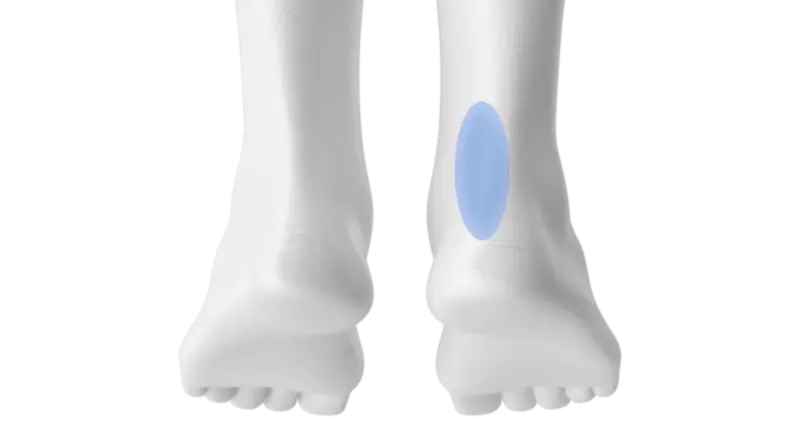
The Achilles tendon is the largest tendon in our body. It connects the calf muscles to the heel. Think about how many times you use it a day: every time you walk, run, climb stairs. This tendon is a hard worker. But that's precisely why it can become inflamed.
Achilles tendinitis is essentially an inflammation of the tendon. It can be acute—the kind that occurs after a particular effort—or chronic, when the problem has persisted for a long time. I've seen it in runners who overtrained, but also in sedentary people who took a longer-than-usual walk.
The area swells. It hurts, especially in the morning when you get out of bed, or after sitting for a while. My patients describe it as a "vise-like" pain or "like someone pulling on the tendon."
Why does Achilles tendonitis occur?

The causes? There are many, and they often combine. A sudden increase in physical activity is one of the main ones. I often see patients who say, "I started running on Monday, and by Friday I was already sore." The body needs time to adapt.
Then there are biomechanical issues. If you have flat or high-arched feet, or if you strike a particular foot strike, the tendon can malfunction and become inflamed. Age also matters: after 35-40, the tendon becomes less elastic, more prone to problems. And of course, the wrong shoes can be the straw that breaks the camel's back.
To be honest, I've noticed that it's often a combination of factors. An already somewhat stressed tendon encountering an ill-fitting shoe can cause the problem.
The symptoms you need to recognize
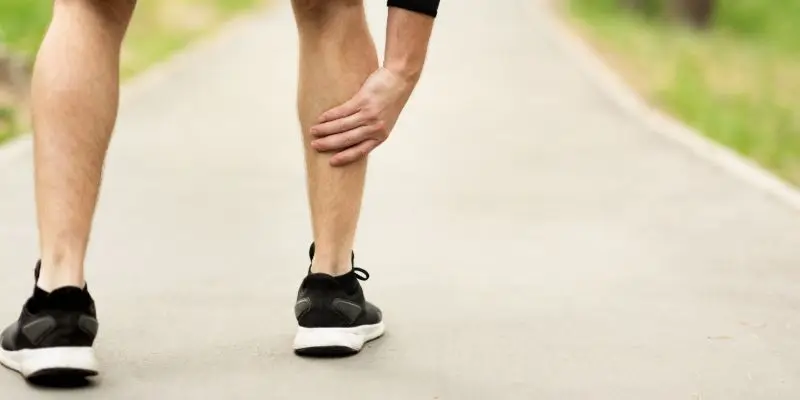
Pain is the main symptom. At first, it might just be a small twinge. "Oh, I must have slept badly," you think. Then it becomes more constant. It hurts when you start walking, then it seems to go away with movement, but it comes back when you stop.
Morning stiffness is often present. Getting out of bed, and the first steps are truly uncomfortable. The tendon may swell and become thicker to the touch. In more severe cases, a nodule may form, a kind of thickening that can be felt when touched.
Another sign I see often: pain after physical activity. You've been exercising, and everything was fine at the time, but in the evening or the next day, the tendon starts to complain.
How do I diagnose?
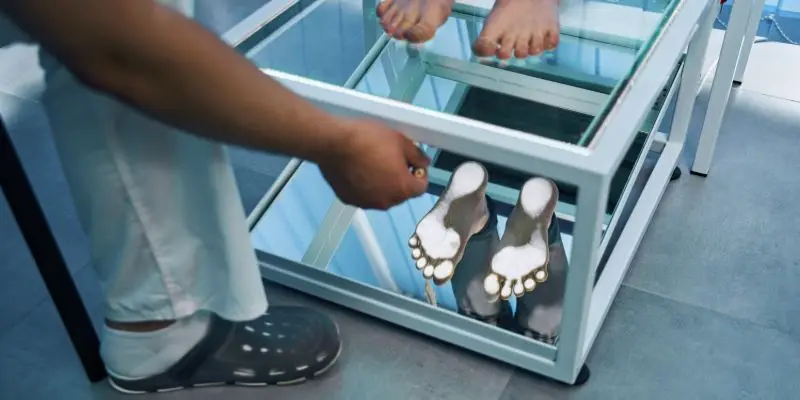
When a patient comes to me with these symptoms, the first thing I do is listen to their story. When did the pain start? What were you doing? What shoes were you wearing? This information is crucial.
Then I examine the tendon. I palpate it to feel for thickening or more painful areas. I move the foot to assess its flexibility. Sometimes I ask the patient to stand on tiptoe to see how the tendon reacts.
If I have any doubts or the case is specific, I can request an ultrasound. It's the perfect test to see the condition of the tendon: whether it's thickened, whether there are calcifications, and how the surrounding tissues are. I use MRI less often, only in the most complex cases.
The characteristics that shoes for the Achilles tendon should have
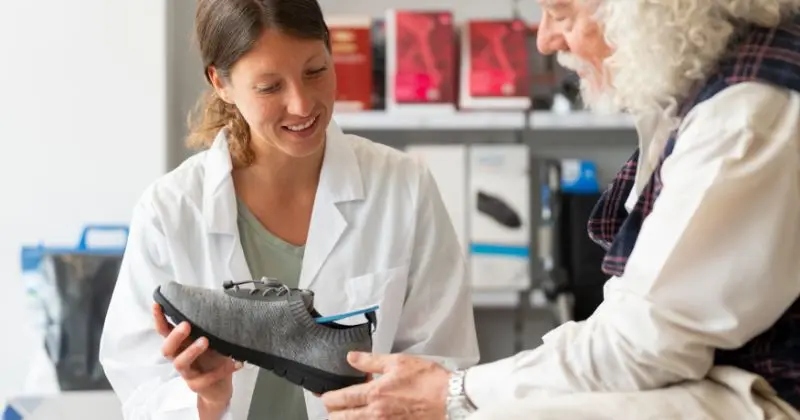
Now let's get to the point: which shoes for Achilles tendonitis should you choose? Not all shoes are created equal when you have Achilles tendonitis. Some features are really important.
Cushioning is essential. The heel needs to be "cuddled" during impact. A shoe with good rearfoot cushioning reduces stress on the tendon. Think of the difference between walking on a hard pavement in ballet flats and doing so in well-cushioned sneakers.
Heel support is another key element. A shoe that holds the heel firmly in place prevents abnormal movements that could further irritate the tendon. It shouldn't be as rigid as a cast, but it shouldn't be a ballet flat that offers no support.
Flexibility in the forefoot is important because it allows the foot to move naturally during the stride. A shoe that's too rigid can create additional compensation and stress.
The materials must be breathable—a foot that "boils" in a closed shoe is never a good thing—and the fit must be comfortable but not too loose. The foot should not wobble inside the shoe, but it should not be compressed either.
What kind of shoes to choose
For athletes, running shoes with maximum shock absorption are excellent. Many manufacturers have specific models for those with Achilles tendon problems. They feature reinforced heel areas and specially designed cushioning.
For everyday life, walking shoes with support and stability are perfect. They give that feeling of "control" of the foot without being too heavy. I often recommend them to my patients who work on their feet.
Casual shoes must still be comfortable and flexible. Not all dress shoes are bad for your Achilles tendon—you just have to choose wisely. Avoid high heels or completely flat shoes.
In some cases, orthopedic shoes may be necessary. They have specific features designed to correct specific biomechanical problems.
How to choose the right shoes for you
The first thing I always tell my patients is: consult an experienced doctor or physical therapist. Every case is different. The tendinitis of a 30-year-old runner isn't the same as that of a 60-year-old woman walking around town.
Consider the severity of your problem. If it's just starting out, perhaps changing your shoes is enough. If it's chronic, you may need custom insoles along with the right shoes.
Consider your lifestyle. If you run often, invest in quality running shoes. If you walk a lot for work, opt for comfortable yet supportive shoes that last all day.
And above all: always try on shoes before buying them. Walk around the store and feel how your foot feels. Shoes should be comfortable right away; they won't "stretch out" over time. Replace worn-out shoes regularly—a worn sole can cause more damage than you think.
Other tips for treating tendonitis
Shoes are important, but they're not everything. Rest is essential when the tendon is inflamed. This doesn't mean staying in bed, but rather reducing activities that cause pain.
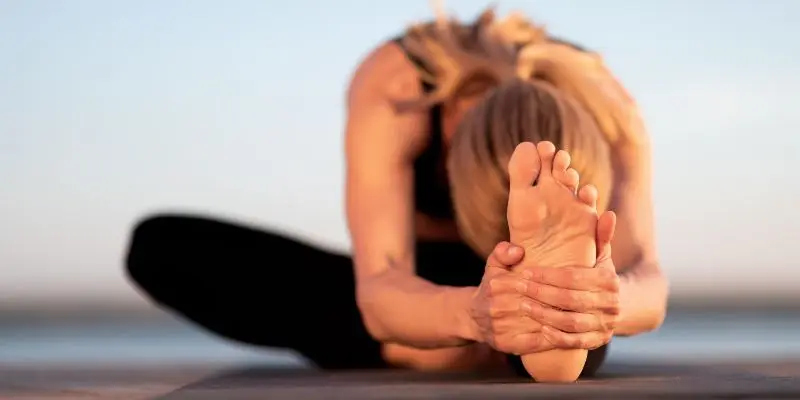
Stretching your Achilles tendon and calf muscles is essential. Your physical therapist will teach you how to do it, but you can also do it at home. A few minutes a day, done properly, can make a difference.
Ice after activity can help control inflammation. And when the pain is severe, painkillers can provide temporary relief.
In more severe cases, we may consider corticosteroid injections or, even better, hyaluronic acid. But we'll decide this together, on a case-by-case basis.
When surgery is necessary
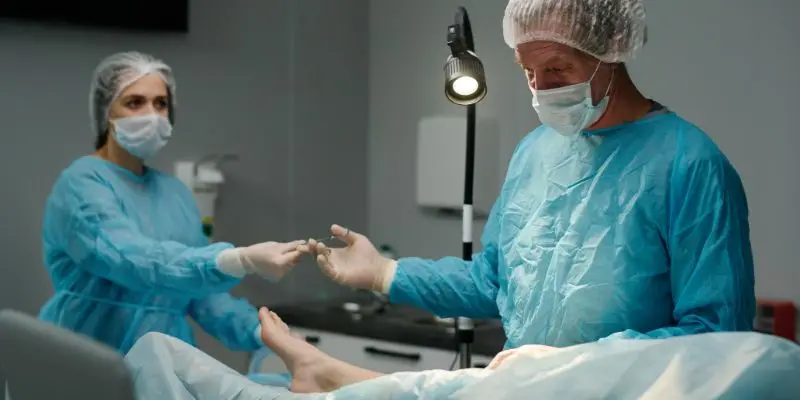
Surgery for Achilles tendinitis is not the first choice. I use it when conservative treatment fails and the patient still has pain after months of appropriate treatment.
There are various types of procedures, from tendon cleaning in cases of chronic tendinosis to repair in the case of a partial tear. These procedures require specific expertise, as the Achilles tendon is unforgiving.
Post-operative rehabilitation is crucial. It's not quick—it takes months to return to normal activity—but when done well, the results are excellent.
SmartHallux: Where we can help you

Here at SmartHallux, we specialize in foot and ankle surgery. Dr. Luigi Manzi, who has extensive experience in this field, provides each patient with a personalized treatment plan using the most modern and minimally invasive techniques.
Our experience in Achilles tendinopathy allows us to accurately assess when surgery is truly necessary and when everything can be resolved with targeted conservative treatment.
The SmartHallux team treats conditions such as hallux valgus , Morton's neuroma , and other deformities that cause foot pain. Providing comprehensive support throughout the treatment process, SmartHallux can be a winning choice for effective treatment tailored to your needs. Book your specialist consultation with the SmartHallux team now (opens in a new tab).
Questions you often ask me
Doctor, how long does it take to heal?
It depends on the severity and chronicity of the problem. Acute tendinitis can resolve in a few weeks with the right approach. Chronic tendinitis can take months. Patience is key.
Can I continue to play sports?
If the pain is mild and bearable, yes, but reduce the intensity. If it really hurts, it's best to stop. The tendon needs rest to heal.
Are expensive shoes always better?
Not necessarily. A €200 shoe that doesn't fit your foot can do more damage than a well-chosen €50 one. The important thing is that it's right for you.