
Lack of Cartilage: What You Need to Know
Lack of cartilage means the joint surfaces rub together, causing pain and stiffness in the foot or ankle. The causes, symptoms and treatments available.
By Dr. Luigi ManziUpdated on
Have you ever felt that annoying creaking sound in your knees when you wake up? Or maybe you've noticed that your joints are stiffer, especially in the morning. It could be a cartilage problem that's wearing away. And it's more common than you think.
Cartilage loss is one of the problems I see often in my office. It's not just a matter of age—although it's true that cartilage tends to wear out over time. Many factors can contribute to this process, and the good news is that we have several strategies to address it.
Let's talk about it together, because understanding what's happening in your body is the first step to feeling better.
What is this famous cartilage and why is it so important?
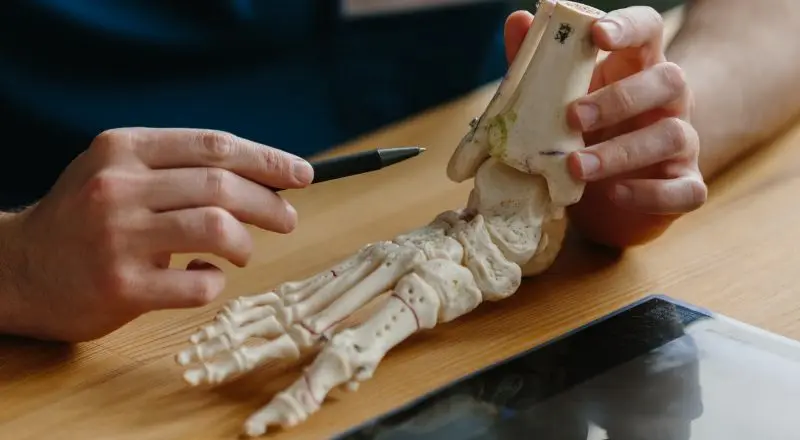
Cartilage is a bit like the shock absorber in your car. Except instead of absorbing road shock, it absorbs the loads on your joints when you walk, run, or even just move.
It's a special tissue, smooth and slippery. Imagine two icebergs sliding over each other—well, cartilage does something similar in your joints. It allows bones to move without friction, distributes weight, and protects the underlying bone.
The human body contains several types of cartilage. The one that most concerns us when we talk about joint problems is articular cartilage—the one that lines the surfaces of bones in joints like the knees, hips, and ankles. But there's also the cartilage in the nose, ears, and the one that connects the ribs.
The problem is that cartilage has a peculiar characteristic: it lacks blood vessels. This means that when it gets damaged, it struggles to repair itself. It's like trying to heal a wound without blood flow to deliver nutrients and repair cells.
Why cartilage wears out
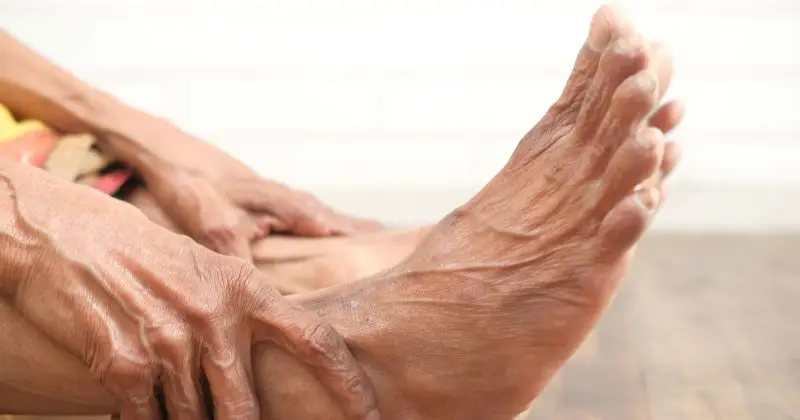
So, why does this happen? There are several causes, and they often combine.
Some people are born with cartilage problems—these conditions are rare, but they do exist. More often, however, cartilage deficiency develops over time for other reasons.
Osteoarthritis is probably the most common cause I see. It's the wear and tear process that affects joints with age, but not only that. I have patients in their 40s with advanced arthritis and others in their 70s whose joints are still in good condition. It depends on many factors.
Trauma plays a significant role. A severe sprain, a fracture involving the joint, a sports injury—all events can damage the cartilage and trigger a process of degeneration. The problem is that cartilage damage often isn't immediately visible, but manifests itself years later.
Obesity is another factor we can't ignore. The more weight your joints carry, the more they wear out. It's mathematical, in a sense. And we're not just talking about knees and hips—the ankle and foot are also affected by overload.
Then there are work or sports activities that put a lot of strain on the joints. The bricklayer who's constantly on his knees, the runner who clocks up mile after mile, the soccer player who makes frequent changes of direction... All of these can contribute to cartilage wear.
The signals your body sends you

Pain is usually the first warning sign. But it's not just any pain—it has specific characteristics. At first, you may only feel it when you move, but then it can become constant. It's a pain that often worsens with activity and improves with rest.
Morning stiffness is another typical symptom. You get out of bed, and for the first few minutes your joints feel stiff. Then, as you move, the situation improves. It's as if your joints need to warm up.
Over time, you may notice that the joint no longer moves as well as it used to. Perhaps you can no longer bend your knee fully, or your ankle is less flexible. This happens because, when cartilage is missing, the joint can become deformed.
Sometimes you'll also hear a creaking sound—what we call "crepitus." This is the sound bone surfaces make when they're no longer as smooth as they should be. It's not always painful, but it's a sign that something is wrong.
In the ankle and foot, which are somewhat of my specialty, these problems can also manifest themselves with recurrent swelling, difficulty walking on uneven terrain, or that feeling of instability when you put your foot down.
How we arrive at the diagnosis

When a patient comes to me with these symptoms, my first diagnostic tools are my hands and eyes. The physical examination tells me a lot: how the patient walks, where the pain is located, how the joint moves, if there are any obvious deformities.
Then, of course, we resort to instrumental tests. X-rays are often the first test I do—they're simple, quick, and provide a wealth of information. I can see if the joint space is narrowed, if there are osteophytes (those bony "spurs" that form when cartilage is missing), if the underlying bone is altered.
MRI is more sophisticated and allows me to see the cartilage directly. It's particularly useful when I want to assess the extent of the damage or plan surgery. It's not always necessary, but in some cases it's essential.
Arthroscopy, a minimally invasive surgical technique, is sometimes used for both diagnosis and treatment. I insert a small camera into the joint and can directly see what's happening. It's like looking inside with your own eyes.
The treatment options we have today

There are many options here, and it depends greatly on the specific situation. There's no one-size-fits-all solution.
We often start with conservative treatments. Anti-inflammatories can help with pain and inflammation, but they're not a long-term solution. Physiotherapy is essential—it helps maintain joint mobility and strengthen the muscles that stabilize the joint.
Hyaluronic acid injections are an interesting option. They're like "lubricating" the joint from the inside. It doesn't work for everyone, but I've seen good results in many patients, especially in the early stages of the problem.
Orthotics—insoles, braces, canes—can make a difference. A good insole can redistribute loads and significantly reduce pain. It's not the most glamorous solution, but it's often very effective.
When conservative treatments are no longer sufficient, surgery must be considered. Arthroscopy allows us to "clean" the joint, remove fragments of damaged cartilage, and smooth the surfaces. It doesn't necessarily regrow the cartilage, but it can provide significant relief.
In more advanced cases, we may need to consider more significant procedures such as osteotomies (corrections of the bone axis) or, in the most severe cases, joint replacements. Ankle replacement, for example, is a procedure we are increasingly performing with excellent results.
There are also some very promising experimental treatments. Stem cells, gene therapy, tissue engineering techniques... The future is full of exciting possibilities, even if for now we are still in the research phase for many of these techniques.
Prevention: What you can do

Prevention is always better than cure, right? And here are some concrete things you can do.
Regular exercise is essential, but it must be the right kind. Walking, swimming, cycling—activities that keep your joints moving without putting too much stress on them. Avoid high-impact sports if you already have joint problems.
Body weight is crucial. Every extra pound puts four extra pounds on your knees when you walk. It's a simple but impressive calculation. Maintaining a healthy weight is one of the most important things you can do for your joints.
Diet plays a role. There's no miracle diet for cartilage, but an anti-inflammatory diet—rich in omega-3s, vegetables, and fruit—can help. And staying well hydrated is important because cartilage is 70% water.
Avoid injuries whenever possible. Wear appropriate footwear, stretch before exercising, and don't ignore minor aches and pains that could indicate an early problem.
SmartHallux: Where we can help you

Here at SmartHallux, we specialize in foot and ankle surgery. Dr. Luigi Manzi, who has extensive experience in this field, provides each patient with a personalized treatment plan using the most modern techniques.
For worn patellas and other cartilage problems in the foot and ankle, we use both conservative and cutting-edge surgical techniques, including ankle replacements when necessary. We have also developed an "Achilles tendon emergency" service for acute emergencies.
The SmartHallux team treats conditions such as hallux valgus , Morton's neuroma , and other deformities that cause foot pain. Providing comprehensive support throughout the treatment process, SmartHallux can be a winning choice for effective treatment tailored to your needs. Book your specialist consultation with the SmartHallux team now (opens in a new tab).
Questions you often ask me
What happens if the cartilage wears away completely?
It's a question I hear often, and the answer depends on the joint and the person. If the cartilage wears away, the underlying bone begins to suffer, and osteophytes can form. Pain increases, mobility decreases. But we have solutions for these situations too—from injections to prosthetics, depending on the case.
Can cartilage grow back?
Unfortunately, adult cartilage has very limited repair capabilities. Once damaged, it rarely repairs itself completely. This is why prevention is so important, and why we are investing so much in stem cell research and regenerative therapies.
When is surgery necessary?
This is perhaps the most important question. Generally, we consider surgery when conservative treatments no longer provide results and quality of life is compromised. If you can no longer perform your daily activities due to pain, if you can't sleep at night, if medications no longer work... then it's time to evaluate other options.