
Heel fracture: when pain changes everything
A heel fracture, or calcaneus fracture, usually follows a fall from height or a road accident. The symptoms, how it is diagnosed and how it is treated.
By Dr. Luigi ManziUpdated on
Have you ever felt that stabbing pain in your heel that makes you limp? Maybe after a bad fall, a bad jump, or even worse, a car accident.
The heel, or rather the calcaneus—the largest bone in the foot—can fracture. And when it happens, believe me, you notice it right away. I've seen patients come to my office unable to even put their foot on the ground, while others continue walking, thinking it was just a bruise.
A heel fracture isn't something to be taken lightly. After all, we're talking about the bone that supports all of our body weight when we walk, run, or simply stand.
What exactly is a heel fracture?
Think of the heel as the base of a crane. If it breaks, the entire structure becomes unstable.
The calcaneus can fracture in several ways. There are extra-articular fractures, those that don't involve the joints—the gentlest, so to speak. And then there are intra-articular fractures, which involve the joint with the talus above or the cuboid in front. These are more complicated to manage.
Have you ever seen someone limp for weeks after a heel injury? Well, that could be the problem.
How does a heel fracture occur?

Most of the time I see a calcaneal fracture, it's the result of a fall from a height. A worker falls from scaffolding. A person slips down the stairs. Or a classic car accident, where the foot is crushed against the floor of the car.
In young athletes, I often see stress fractures—the kind that form slowly, due to repeated microtraumas. Runners who overdo the mileage, for example.
But be careful: even a minor fall at home can cause a fracture, especially if you have fragile bones. Osteoporosis is unforgiving, and what might be just a bruise for a twenty-year-old can become a fracture for an older person.
Symptoms You Can't Ignore

“Doctor, I felt a snap and then a terrible pain.” This is what patients often tell me when they come to the office.
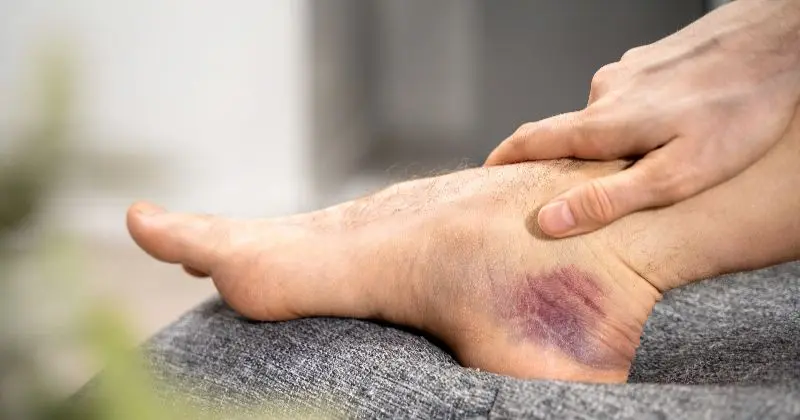
The pain is intense. Immediate. It's not the discomfort that goes away with an anti-inflammatory—it's real pain, making you see stars. Swelling sets in soon after, along with bruising that often extends to the ankle and the top of the foot.
Walking becomes nearly impossible. I've seen patients who could only bear weight on the balls of their feet, keeping their heels elevated. Others couldn't even put a toe down.
Sometimes there's also numbness or tingling—this happens when the swelling compresses a nerve. And in more severe cases, the heel deformity is visible to the naked eye.
How do I diagnose?

When you come into my office with a suspected heel injury, the first thing I do is observe how you walk. Or rather, how you try to walk.
Then I move on to the physical exam. Gentle palpation—I know it hurts, but I need to figure out exactly where the problem is. I check your circulation, sensation, and whether you can wiggle your toes.
But the definitive diagnosis comes with imaging. X-rays are the first test—simple, quick, and in most cases sufficient to see if there's a fracture.
When the situation is more complex, when I suspect the joints are involved, I request a CT scan. It provides a perfect three-dimensional view of the bone and allows me to better plan treatment.
MRI? I rarely use it for acute heel fractures, but more often for stress fractures or when I want to evaluate the surrounding soft tissue.
Treatment options: What to do after diagnosis

Here we come to the crux of the matter. What should we do when we've confirmed a heel fracture?
Not all fractures are the same. Displaced fractures, where bone fragments are displaced, almost always require surgery. We can't allow your heel to heal "crooked"—the long-term consequences would be devastating to your ability to walk.
Modern surgery involves the use of plates and screws to put everything back in place. It's a delicate procedure, requiring specific experience in foot surgery, but the results are generally good.
For non-displaced fractures, however, conservative treatment is often possible. A cast or brace, no weight bearing for at least 6-8 weeks, and a lot of patience are often recommended.
But be careful: even conservative treatment requires careful monitoring. Repeated X-rays are essential to ensure the fracture does not dislocate during healing.
How long does it take to heal?

This is the question everyone asks me. “Doctor, when will I be able to walk normally?”
The heel is a unique bone—its vascularization isn't the best, which means healing takes longer than other fractures. We're talking at least 3-4 months for simple fractures, but often up to 6 months for more complex ones.
Rehabilitation is crucial. It's not enough for the bone to heal—you need to regain ankle mobility, calf muscle strength, and balance. And above all, you need to relearn how to walk properly.
SmartHallux: Where we can help you

Here at SmartHallux, we specialize in foot and ankle surgery. Dr. Luigi Manzi, who has extensive experience in this field, provides each patient with a personalized treatment plan using the most modern techniques.
The SmartHallux team treats conditions such as hallux valgus , Morton's neuroma , and other deformities that cause foot pain. Providing comprehensive support throughout the treatment process, SmartHallux can be a winning choice for effective treatment tailored to your needs. Book your specialist consultation with the SmartHallux team now (opens in a new tab).
Questions you often ask me
How do I know if it's really broken or just a bruise?
If you can't put your foot on the ground, if the pain is severe, and the swelling is significant, it's best not to wait. An X-ray will quickly dispel any doubts, and if it's truly fractured, every hour that passes without proper treatment can make things worse.
Is it true that if it's fractured I have to have surgery?
Not always. It depends on the type of fracture. If it's displaced, if it involves the joints, probably yes. But many calcaneal fractures can be treated without surgery, with good results. Each case must be evaluated individually.
Will I ever walk like before?
This is the question that pains me the most to answer, because I always want to say "yes, 100%." The truth is, it depends on the severity of the fracture and how early treatment begins. Many patients return to their normal activities, while others may experience some limitations. The important thing is to put yourself in expert hands from the very beginning.