
Brachymetatarsia vs. equinus foot: diagnosis and treatment options
Brachymetatarsia and equinus foot are different conditions that can both alter gait. How each is diagnosed, how to tell them apart and the treatment options.
By Dr. Luigi ManziUpdated on
Foot problems include brachymetatarsia and clubfoot . On the one hand, brachymetatarsia causes one metatarsal bone to be shorter than it should be , resulting in an unusual appearance. On the other hand, clubfoot refers to a foot that tilts downward . In this article, "Brachymetatarsia or Clubfoot," we'll analyze these two conditions. Both deserve attention, and fortunately, there are ways to diagnose and treat both conditions.
Understanding brachymetatarsia in the foot
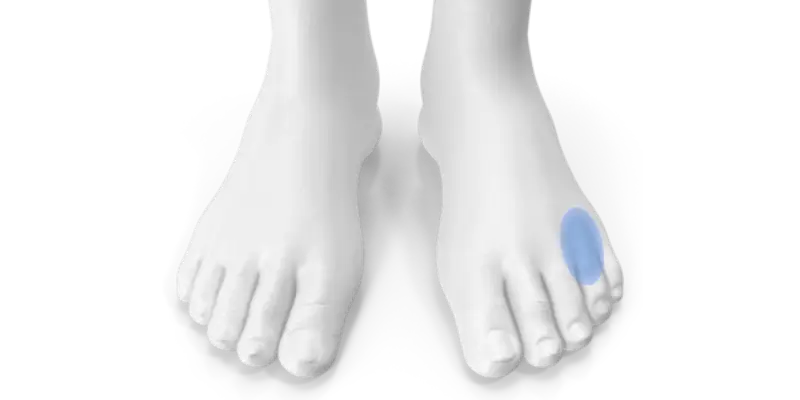
Brachymetatarsia of the foot is a condition characterized by the presence of one or more metatarsals of the foot that are shorter than normal. This condition can lead to a variety of complications, from difficulty walking to aesthetic problems.
Despite its complex name, the causes of brachymetatarsia are quite common. It is often a congenital condition , meaning it is genetically inherited. However, it can also be caused by trauma or stunted bone growth due to certain diseases.
The symptoms? Aside from shortened metatarsals, you'll experience pain when walking, calluses, and, in the worst cases, difficulty finding suitable shoes.
If you suspect you have brachymetatarsia, a foot X-ray will provide your doctor with all the details they need to make a definitive diagnosis. In some cases, additional tests, such as an MRI , may be necessary, but in most situations, a simple X-ray will suffice.
Equine foot analysis

Equine foot is a condition so called not because you have a horse's foot, but because yours tends to point downward , just like a horse's leg.
Equinus foot can arise from a variety of causes. Genetically, conditions such as cerebral palsy or muscular dystrophies can contribute. Nerve injuries , however, especially those involving the peroneal nerve , can cause the foot to become in its unusual position.
In this case, it may be time for a diagnosis. The doctor will examine the muscle cord through a detailed physical assessment and may perform additional tests such as electromyography or CT scans to gain a clearer picture of the problem.
Identifying equinus foot among all the other possible foot deformities may seem like a daunting task. However, the characteristic pronation of equinus foot makes it relatively easy to distinguish from other conditions, such as flat instep or hallux valgus . While other deformities may have overlapping symptoms, the distinctive inclination of equinus foot is almost always a telltale sign.
Treatment options for brachymetatarsia of the foot

Treating brachymetatarsia in the foot may seem complicated, but there are treatment options for all needs, whether conservative or more invasive.
Non-surgical treatments
Those who have just discovered that they have brachymetatarsia in their foot do not necessarily need to undergo surgery, because there are some effective non-surgical treatments, such as:
- Orthopedic insoles: They help distribute pressure evenly across the foot, reducing pain and improving function.
- Special shoes: purchase shoes that offer more support.
- Physical therapy: the exercises for strengthen the foot muscles can provide greater stability.
Surgical treatments
However, if brachymetatarsia is particularly bothersome, and conservative methods are not suitable for the specific case, there are effective surgical solutions, such as:
- Osteotomy with progressive lengthening: This technique involves the use of a external fixator to gradually lengthen the bone.
- Bone graft: This involves adding a block of bone to lengthen the metatarsal.
- Distraction osteogenesis: a rather complicated process that aims to make bone grow over time.
Treatments for clubfoot

There are various ways to address the problem of clubfoot. Let's explore them below.
Conservative approaches
Before considering the scalpel, you can try the more conservative approach , which will certainly help you walk better:
- Braces and insoles: they are used to improve functionality and adapt the position of the foot.
- Botulinum toxin injections: useful for relieve muscle tension.
Surgical interventions
If clubfoot is making your life unbearable, here are the surgical options your specialist may suggest:
- Tendon lengthening: Technically it's about putting the tendons back in place.
- Joint fusion: When orthopedic shoes and physical therapy aren't enough, this more invasive procedure can make a difference.
Book your visit with SmartHallux

Thanks to innovative techniques and a personalized approach, SmartHallux offers effective solutions to improve your quality of life. Brachymetatarsia, with its short metatarsals, can cause pain and difficulty walking, while equinus foot, with its downward tilt, can limit mobility. SmartHallux uses advanced techniques to treat these conditions safely and minimally invasively.
Don't let these problems affect your daily life. Book a consultation now using the booking form on our website and find out how we can help you restore your foot health.