
Ankle arthrodesis: when the pain doesn't give you any respite
Ankle arthrodesis, or ankle fusion, locks the joint to relieve the pain of severe arthritis. When it is chosen over replacement, how it is done and recovery.
By Dr. Luigi ManziUpdated on
Have you ever woken up in the morning and felt like your ankle was "locking up"? Constant pain, incessant stiffness, the feeling of always walking on something unstable. Well, if you're reading this article, you probably already know what I'm talking about.
Ankle arthrodesis—let's call it ankle fusion, which better conveys the idea—is a procedure we consider when other options have proven insufficient. It's not a decision we make lightly, I assure you. But sometimes it truly is the only option to restore a person's quality of life.
What does it mean to “fuse” an ankle?

When I talk about arthrodesis with my patients, I always see the same puzzled expression. "Doctor, if my ankle locks, how will I walk?"
It's a valid question. Arthrodesis literally means creating a fusion between the bones that form the ankle joint—primarily the talus, tibia, and fibula. Essentially, we eliminate the movement of that specific joint to eliminate the pain that comes from the friction of the damaged joint surfaces.
Think of a rusty hinge that creaks and hurts every time you move it. Locking the ankle is like trying to fix that hinge in a functional position so that it stops hurting.
When it's time to consider arthrodesis
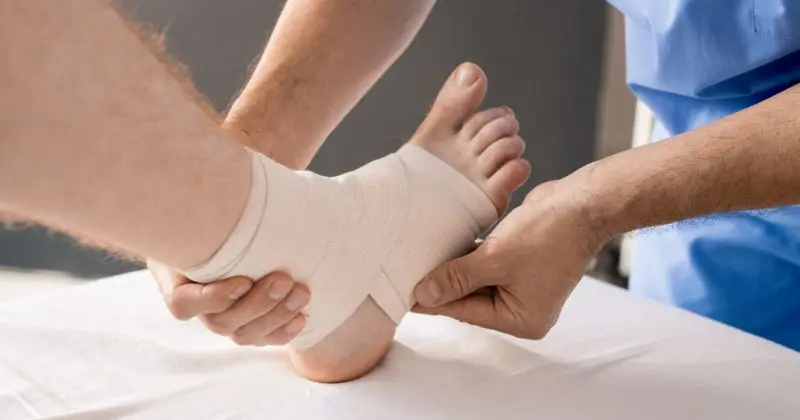
It's not like you wake up one morning and decide to undergo arthrodesis. We get there after a journey that's often long and arduous for the patient.
Severe ankle arthritis is the most common cause I see in my practice. That pain starts off subtle and then becomes increasingly severe, to the point of limiting all movement. I have patients who tell me, "Doctor, I can't even go grocery shopping anymore."
Complex, poorly healed fractures are another reason. When an ankle fracture heals poorly, it creates deformity and instability that can become unbearable over time. I've seen cases of people who, years after a "seemingly well-healed" fracture, developed debilitating pain.
Rheumatoid arthritis often affects small joints, and the ankle is no exception. In these cases, chronic inflammation progressively damages the cartilage, making every step agonizing.
The signals your body sends you

Pain is the main protagonist. But not just any pain—it's that dull, constant ache that worsens with activity and often doesn't leave you alone, even at rest. Patients describe it to me as "a nail hammered into my ankle" or "like someone holding my ankle in a vice."
Morning stiffness is another major warning sign. You get out of bed, and for the first few steps, your ankle feels like it's made of wood. Then, little by little, it warms up a bit, but it never returns to normal.
Swelling is often present, especially at the end of the day. It's not the acute swelling of a sprain—it's persistent swelling that comes and goes but never completely goes away.
And then there's the instability. That feeling of never being able to be sure of your footing, of always having to watch where you're putting your foot because your ankle suddenly gives out.
How do I diagnose?
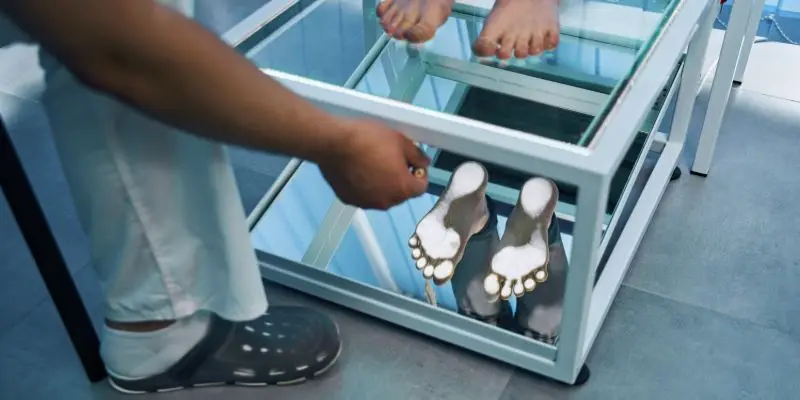
When a patient comes to my office with these symptoms, the first thing I do is listen. I really listen to their story, because often the story itself tells me a lot.
Then the clinical examination is crucial. I look at how he walks, how he places his foot, and where exactly it hurts when I press on it. I test the ankle's mobility and determine if there are any obvious deformities.
X-rays are the next mandatory step. They show how much cartilage has been worn, whether there are any bone deformities, and whether the ankle is twisted. In case of doubt, I may request a CT scan to better see the bone details or an MRI to evaluate the soft tissues.
Sometimes I also inject a local anesthetic into the joint. If the pain temporarily disappears after the injection, I know the problem is there.
Treatment options: never start with arthrodesis

Before considering arthrodesis, we always try all other options. That's how I work, and that's how it should be for everyone.
Anti-inflammatory drugs may provide temporary relief, but they don't address the underlying problem. I use them to manage flare-ups, not as a long-term solution.
Physiotherapy is essential for maintaining existing movement and strengthening the compensating muscles. I've seen patients significantly improve only with a good rehabilitation program.
Injections with hyaluronic acid or cortisone can buy time and reduce inflammation. They don't work miracles, but they sometimes allow surgery to be postponed for months or years.
Ankle replacements are a modern alternative to arthrodesis. They preserve motion, but they aren't suitable for everyone. It depends on the patient's age, the type of deformity, and the quality of the bone.
Arthrodesis surgery: what to expect
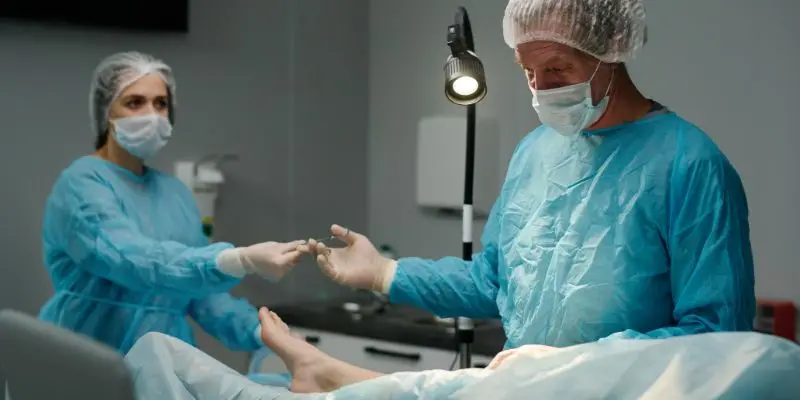
When we decide to undergo arthrodesis, I always explain to patients that it's a "major" procedure. Not in the sense that it's dangerous—the risks are acceptable—but in the sense that it changes the biomechanics of the foot and requires a significant recovery period.
The procedure can be performed using various techniques. Screws, plates, pins, or a combination of these methods may be used to hold the bones in place while they fuse. The choice depends on the specific case.
Hospitalization usually lasts 2-3 days. In the first few days after surgery, the foot must be kept at rest, elevated, and without any support.
Recovery: Patience and Determination
This is the part that requires the most patience. For the first 6-8 weeks, you'll need to wear a brace or cast and walk with crutches, never putting your operated foot down. There's no need to compromise on this.
After the first few weeks, if X-rays show that the bone is healing well, you'll gradually begin to put weight back on your foot. This process takes another 2-3 months.
Complete bone fusion can take up to 4-6 months. During this time, it's essential to carefully follow the surgeon's and physical therapist's instructions.
Most of my patients return to normal walking within six months, although full recovery can take up to a year. The important thing is that the pain, the constant and disabling kind, disappears in the vast majority of cases.
Living with a “locked” ankle: Better than you think
Many patients are concerned about having a stiff ankle. “How will I ever walk normally?”
The truth is, our bodies adapt better than we imagine. The other joints in the foot partially compensate for the loss of ankle motion. You won't be able to run marathons again, but you'll be able to lead a normal life: walk, drive, work.
I have patients who, after arthrodesis, have gone back to hiking, others who have started dancing again. Obviously, with some limitations compared to before, but without pain. And that's the fundamental difference.
The risks you need to know about
As with any surgery, there are risks that I must clearly explain to you.
Infection is always possible, although with modern precautions it has become rare. If it were to occur, it could require further surgery and prolonged antibiotics.
Failure of the bones to fuse (pseudoarthrosis) is the specific risk of this surgery. It occurs in approximately 5-10% of cases and may require a second surgery.
Healing problems, damage to sensory nerves, and venous thrombosis are possible but uncommon complications.
I always tell my patients: there are risks, and you need to be aware of them, but they shouldn't paralyze you if surgery is indicated. The greatest risk is often continuing to live with debilitating pain.
SmartHallux: Where we can help you

Here at SmartHallux, we specialize in foot and ankle surgery. Dr. Luigi Manzi, who has extensive experience in this field, provides each patient with a personalized treatment plan using the most modern techniques.
The SmartHallux team treats conditions such as hallux valgus , Morton's neuroma , and other deformities that cause foot pain. Providing comprehensive support throughout the treatment process, SmartHallux can be a winning choice for effective treatment tailored to your needs. Book your specialist consultation with the SmartHallux team now (opens in a new tab).
Questions you often ask me
Doctor, is it true that after the arthrodesis I will never be able to run again?
It depends on what you mean by running. A light jog on flat terrain, after full recovery, is often possible. Running on rough terrain or playing contact sports becomes more difficult. But remember: if today you can't even walk without pain, even a light jog will be a great achievement.
How long will the results of arthrodesis last?
If the fusion is successful, the result is permanent. It's not like a prosthesis that can wear out over time. The greatest risk is the development of arthritis in the adjacent joints that must compensate, but this happens over many years and not in all patients.
Can I postpone the surgery and see how it goes?
Of course, it's never an emergency. But keep in mind that the longer you wait, the more the nearby joints will be damaged by the overload. Sometimes putting things off too long just makes the future problem more complicated.