
How long does it take to heal from plantar fasciitis?
How long it takes to heal from plantar fasciitis depends on how early treatment starts and how consistent it is. The typical timeline and what speeds recovery.
By Dr. Luigi ManziUpdated on
“Doctor, how long does it take to heal from plantar fasciitis?”
It's probably the question I'm asked most often when a patient limps into my office, with that typical expression of someone who's just put their foot on the floor in the morning. And the answer? It's never as simple as we'd like.
Plantar fasciitis is a bit like that annoying roommate who won't leave. It bothers you, it changes your habits, but with the right approach, it eventually goes away. The problem is that recovery times can vary greatly. I've seen patients feel better in a month, and others who took eight or nine months to fully return to normal.
What exactly is this plantar fasciitis?
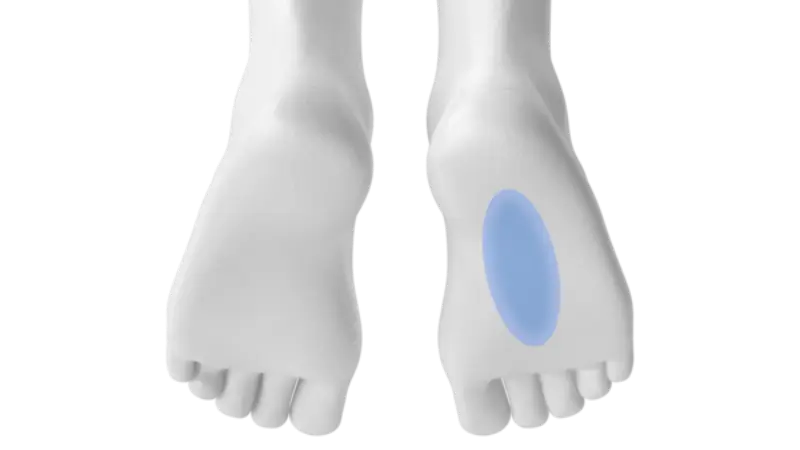
Let's start with the basics. The plantar fascia is that tough "cord" that runs across the entire sole of your foot, from the heel to the toes. Think of it as a taut elastic band that supports the arch of your foot when you walk, run, or simply stand.
When this fascia becomes inflamed—that's fasciitis—it becomes like a wound that's constantly irritated. That's why it hurts so much in the morning: during the night, the fascia "shortens" a little, and when you put your foot down in the morning, it's as if you've suddenly pulled a tight muscle.
The other day, a runner came to me and described the pain as "walking on a nail." Now, that's a description I hear often. It's not just annoying: it's downright painful.
Why does this damn fasciitis occur?

The causes? There are many, and they often combine. Being overweight is certainly a major factor—more weight means more stress on the plantar fascia. But even slim people can suffer from it, of course.
I've noticed that many of my patients with plantar fasciitis have recently started running or changed their workout routine. The foot needs time to adapt to the new loads. Others have very flat feet or, conversely, a very pronounced arch. And then there are the wrong shoes—those flip-flops that are so trendy in the summer are the plantar fascia's number one enemy.
Even overly tight calves can be a problem. If the hamstrings are tight, the foot is forced to work incorrectly, and the plantar fascia suffers the consequences.
How do I know if it's actually plantar fasciitis?

It's usually quite mild. The pain is mainly localized on the inside of the heel. It's terrible in the morning when you get out of bed—the first few steps are torture. Then, as you walk, it gets a little better. But if you stay still for a while and start walking again, it's back.
Some patients tell me that the pain radiates along the arch of the foot. Others say their heel is painful to the touch. When I examine a patient, I press right where the plantar fascia attaches to the heel—if they jump up and down, well, the diagnosis is almost made.
Sometimes I order an X-ray, not so much to see the fasciitis (which doesn't show up on x-rays), but to rule out other things like heel spurs or small stress fractures.
Treatments that really work
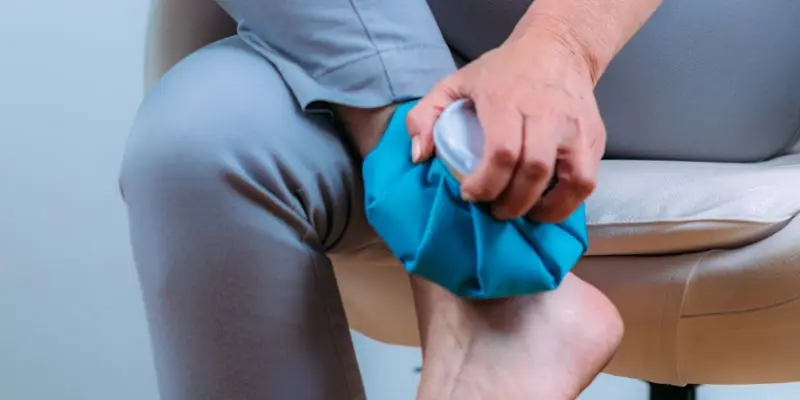
So, let's see what we can do to speed up recovery time. Rest is essential, but it doesn't mean staying completely still—it means being smart. If you run, maybe it's time to switch to a stationary bike for a while. If you have a job that keeps you on your feet all day, try taking more frequent breaks.
Ice works really well, especially in the first few days when the inflammation is most acute. I always recommend filling a small bottle with water, putting it in the freezer, and then rolling it under your foot for 15-20 minutes. It's stretching and cryotherapy combined.
Anti-inflammatories can provide relief, but they don't address the root of the problem. I use them to help in times of crisis, but true healing comes from elsewhere.
The right shoes are essential. I'm not saying you need to buy $300 shoes, but at least something with some arch support. And for heaven's sake, throw away those flat slippers!
The exercises I always recommend

Stretching the plantar fascia is my "ace in the hole." The simplest exercise? Sitting on the bed, grab the toes of the painful foot and pull them toward you. You should feel a stretch along the entire sole of the foot. Hold for 30 seconds, repeat 3-4 times.
The calves also need to be stretched. The classic wall push-up works great: hands against the wall, the sore foot behind, heel on the floor, and push.
A trick that works very well is to place a tennis ball under your foot and roll it back and forth. It's like a deep massage for the plantar fascia.
Plantar Fasciitis Healing Times: The Truth

Here we come to the million-dollar question: how long does plantar fasciitis last?
Most of my patients start to feel better after 2-4 weeks of proper treatment. This doesn't mean the pain goes away completely, but they begin to notice an improvement, especially with morning pain.
A complete recovery? This takes longer. We're talking about 3-6 months in most cases. I've had patients who recovered in two months and others who took a year. It depends on many factors: how severe the inflammation is, how long it's been present, whether there are other foot problems, and how well the patient follows the advice.
One important thing: plantar fasciitis has a nasty habit of returning if the underlying causes aren't addressed. It's not enough to wait for the pain to go away—you need to understand why it occurred and address that.
When surgery becomes necessary
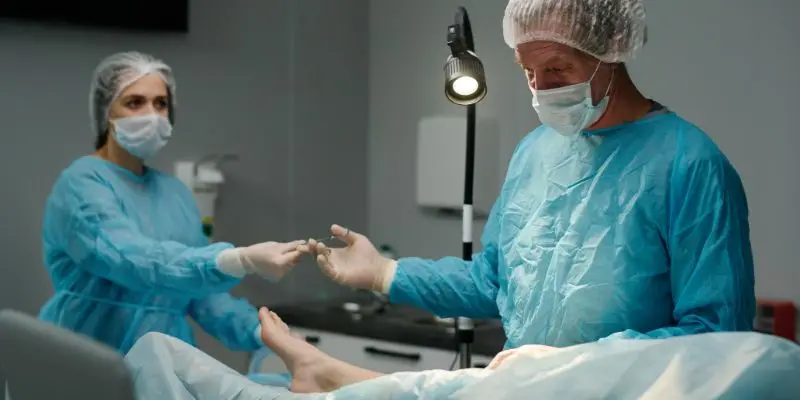
The good news is that surgery is rarely necessary. We're talking less than 5% of cases. Surgery becomes an option when, after 6-12 months of conservative treatment, the pain is still disabling.
The procedure involves partially "releasing" the plantar fascia, relieving excessive tension. It's a day surgery procedure, but recovery times are lengthy—about 3-4 months to return to normal activities.
How to prevent plantar fasciitis
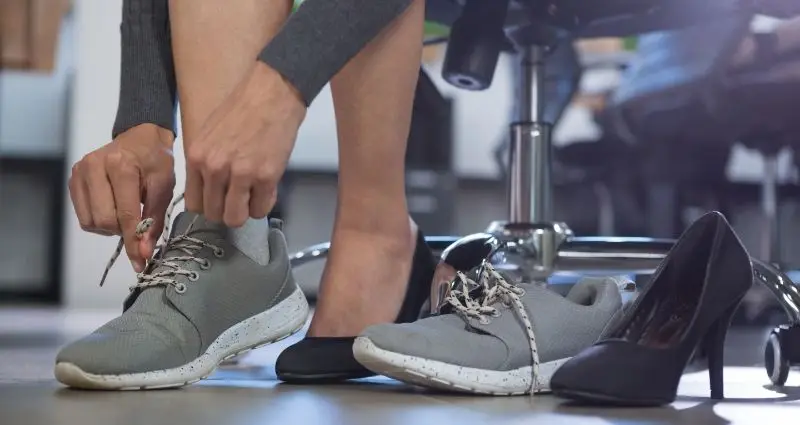
Prevention is always better than cure. Wear appropriate footwear, maintain a healthy weight, and regularly stretch your calves and plantar fascia. If you play sports, gradually increase the intensity—your feet need time to adapt.
And a piece of medical advice: if you start feeling heel pain in the morning, don't wait for it to get worse. The sooner you intervene, the easier and quicker your recovery will be.
SmartHallux: Where we can help you

Here at SmartHallux, we specialize in foot and ankle surgery. Dr. Luigi Manzi, who has extensive experience in this field, provides each patient with a personalized treatment plan using the most modern and least invasive techniques.
The SmartHallux team treats conditions such as hallux valgus , Morton's neuroma , and other deformities that cause foot pain. Providing comprehensive support throughout the treatment process, SmartHallux can be a winning choice for effective treatment tailored to your needs. Book your specialist consultation with the SmartHallux team now (opens in a new tab).
Questions you often ask me
But is it normal for the pain to come and go?
Absolutely. Plantar fasciitis typically has its good and bad days, especially in the early stages of treatment. The important thing is that there's an overall trend of improvement.
Can I continue to play sports?
It depends on the type of sport and the level of pain. Low-impact sports like swimming or cycling are usually fine. For running, it's best to wait until the pain has significantly subsided.
Do insoles really help?
They can be very helpful, especially if you have foot support issues. Custom-made ones aren't always necessary—even good over-the-counter insoles can make a difference.