
Haglund's disease surgery: when is it necessary?
Haglund's disease surgery is considered when heel pain does not settle with shoes, insoles and physiotherapy. When it is necessary and how it is performed.
By Dr. Luigi ManziUpdated on
Haglund's disease surgery : when is it necessary? Before answering, let's explain what the condition is. It's a deformity of the hindfoot, specifically the heel bone. This malformation leads to inflammation of the Achilles tendon , caused by the constant rubbing between the shoe and the heel. The main symptoms are:
- heel pain;
- prominence of the calcaneal bone;
- tendinitis at the insertion point of the Achilles tendon;
- pain during palpation;
- redness and swelling;
- feeling of stiffness;
- retrocalcaneal bursitis.
The pain, which is often constant and disabling, can cause noticeable limping. Is it possible to wear shoes with this condition? It depends on the severity of the malformation.
Haglund's disease and surgery: risk factors

There are several factors that can increase the risk of developing this physical condition. The most common culprits are inappropriate footwear , such as safety shoes or high heels. In some cases, it also manifests itself with other malformations, such as a high arch.
Athletes are particularly affected, especially those who practice sports that cause trauma to the foot, such as soccer, tennis, and running. In these cases, surgery is necessary to resolve Haglund's disease .
Diagnosis
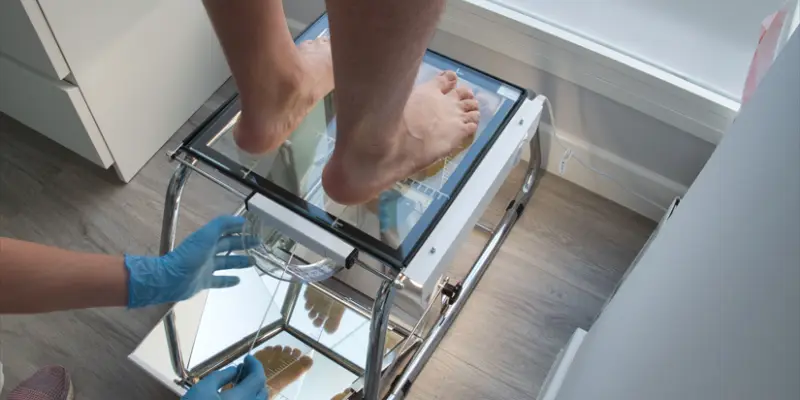
To diagnose this pathology, a series of imaging tests are necessary:
- Radiography: first test to identify bone deformations and tendinopathies.
- Ultrasound: complementary test to confirm the diagnosis and plan the treatment.
- Magnetic resonance: in case the ultrasound does not reveal a suspected tendinopathy.
Haglund's disease and surgery: treatments to prevent it

Treating Haglund's disease with surgery is necessary only when all the treatments available for this condition have failed to produce the desired results. Let's see what they are.
Medical treatment
The first choice for treating this pathology is medical intervention. Options include:
- Footwear adaptation: you need wide and comfortable shoes to avoid the pressure on the heel.
- Orthopedic insoles: they are solutions that improve theheel alignment and distribute the load.
- Nonsteroidal anti-inflammatory drugs: they should be applied locally to reduce inflammation.
- Re-education: manual practices such as stretching and massage can maintain joint flexibility.
Haglund's disease and surgery
When medical treatment fails or the pain persists, surgery for Haglund's disease becomes an unavoidable necessity. Various surgical techniques include:
- removal of excess bone through open incision or arthroscopy;
- interventions on the Achilles tendon, if deemed necessary.
Which of these is most commonly used? It depends on the severity of the situation. Several experienced doctors favor arthroscopy to try to minimize post-operative pain and shorten recovery time. During the procedure, which typically lasts 30 minutes , it is possible to opt for general or local-regional anesthesia.
Postoperative

After treating Haglund's disease with surgery , it is essential to follow all specific post-operative instructions. Both weight bearing and movement are permitted almost immediately, but it depends on the individual case. In fact, they may even be prohibited for approximately 4-6 weeks . Very often, the ankle is immobilized with a brace to further promote wound healing.
To avoid some postoperative complications, such as phlebitis , the anesthesiologist prescribes thromboprophylaxis . The dressing must be changed every two days until complete healing occurs. Post-operative physiotherapy sessions are essential if you want to fully recover your ankle joint in just 2-3 months.
Recovery

How long does it take to return to work and everyday life? The timeframe usually varies between 2 and 8 weeks . For those who participate in sports, the wait is even longer, and can be up to 3 months . Haglund's disease with surgery is, therefore, the best solution for this condition. The important thing is to approach it with confidence, because the final results are always positive.